
Bookkeeping
Annual Income Explained: How to Calculate Yours Accurately
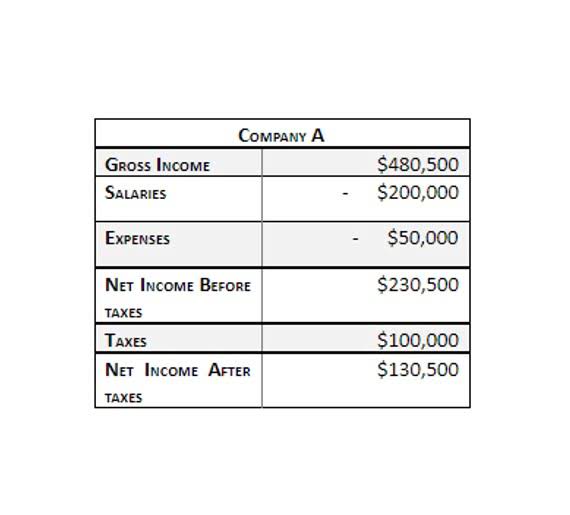
Keep in mind, however, that customers are not required to send 1099s if they paid you less than $600, though you’re still required to report that income. Also, sometimes customers don’t send a 1099, such as due to an oversight, so this isn’t always the most reliable way to calculate your annual income. Note that if you work 50 weeks a year, you can just multiply the hourly wage by 2,000 hours to determine your gross annual income. That can be a quick calculation if you’re comparing hourly jobs and want to see what you might earn in a year. For example, if a job pays $25 an hour, the gross annual income would be $50,000 ($25 x 2,000).
What is the difference between gross and net income?
Annual income is a broader term that encompasses all your income in a year. If you have only one job and no other earnings, your annual income and your salary would be the same figure (assuming salary is given as a yearly amount). If your income is not consistent (for example, varying hours each week or irregular freelance earnings), you may need to estimate an average per week or per month, then annualize it. If you are paid by the hour, take your hourly wage and multiply it by the average number of hours you work per week, then multiply by 52 (the number of weeks in assets = liabilities + equity a year). You can divide that by 12 to get your monthly earnings, before tax withholding.
How to Calculate Your Annual Income
This includes income from residential properties, commercial real estate, vacation rentals, or any other leased assets. If you’re self-employed, this includes the profits you earn from your own business or freelance work after deducting expenses. It covers a wide range of professions, from independent contractors to small business owners.

How to Use the Annual Income Calculator
According to Wyoming’s labor and employment laws, you are considered to be a tipped employee in Wyoming if you regularly receive more than $30 a month in tips. Mr. Johnson is a sales representative at Phillips Pharmaceuticals Co. a company that manufactures and sales over-the-counter medications. He currently has a salary structure with both fixed and variable items. There’s a fixed baseline salary of $1,000 a month and there’s a sales commission that varies according to the amount of money he sells plus incentives.
- That can be a quick calculation if you’re comparing hourly jobs and want to see what you might earn in a year.
- A clear understanding of this figure empowers you to make smarter decisions.
- Annual income is determined by how you define it and your cost of living.
- Simply put, understanding your annual income helps you manage your money with confidence and make financial planning feel a lot less intimidating.
- For instance, if you have an annual salary of $60,000, you would receive $5,000 per month, regardless of the number of hours you work each month.
- With each payday, you’re not just receiving a sum of money; you’re building towards financial goals, securing your present, and crafting your future.
Add up all your sources of income

Calculating your annual income accurately can be complex, especially when dealing with multiple income sources and deductions. Fortunately, there are tools and professional resources available to streamline the process, reduce errors, and save you time. These deductions do not reduce your taxable income but still affect your take-home pay. Our long-term financial goals shall only be achieved through investing wisely so the amount earned each year is used in coming up with ways of diversifying the shared fund. In this blog post, we will highlight the concept of annual income, offering a step-by-step guide on calculating it and emphasising its importance in financial planning. Understanding your annual income helps you determine how much you should save and invest to maintain your desired lifestyle post-retirement.
- Your net annual income, often called take-home pay, is what’s left after taxes and other deductions are removed from your paycheck.
- In fact, learning how to make money online for beginners is a big push towards passive income.
- You can calculate your annual income—gross or net—by knowing just a few numbers.
- For example, earning money on a high-interest savings account is a type of income.
- Total annual income before taxes is the fundamental metric used to determine an individual’s economic capacity and tax liability.
- In this blog post, we will highlight the concept of annual income, offering a step-by-step guide on calculating it and emphasising its importance in financial planning.
Grasping the full import of your annual salary is akin to holding a compass in the journey of financial planning. It’s the measure that informs budgeting, shapes retirement planning, and influences tax outcomes. With a clear understanding of your annual income, you can chart a course toward your financial destinations, be it homeownership, education, or building your retirement savings. Gross pay includes the total compensation an employee earns, such as their salary or hourly wages, overtime, bonuses, and any other earnings. This article will break down different sources of income, and discuss how to accurately calculate annual income from hourly, daily, weekly, or monthly earnings.
- Understanding the chasm between gross and net salary is critical for navigating the treacherous terrain of tax obligations and financial planning.
- For example, if you’re paid $2,500 every two weeks, multiply that by 26 pay periods to get a total of $65,000.
- Imagine standing at the precipice of a financial breakthrough, where the clarity of your annual salary’s role in your life empowers you to make informed decisions.
- Another example of portfolio or investment income is when you invest in your retirement accounts.
- If you are calculating your net annual income, subtract your taxes and other deductions after you do that.
- Understanding your annual income is one of the most important steps toward financial confidence and career literacy.
It’s the amount of money you have left over after federal annual income means and state taxes, mandatory Social Security and Medicare taxes, retirement contributions and other withholdings. Some people refer to net income as take-home pay because it’s the amount deposited into their accounts or written on their paychecks. Your annual income calculation should include all the sources of money you earn or receive during a financial year from April 1st to March 31st of the following year in India. Examples are salary and employment, capital gain and interest, rental, and other incomes.
If you don’t have your offer letter that states your gross annual salary, you can calculate your gross annual income using your pay stubs. Nowadays, many employees get paid by direct deposit, so you might have to log in to your company’s HR portal to view your pay stubs. These deductions include mandatory payroll taxes like federal and state income tax, Social Security, and Medicare.
Create a free account to unlock this Template
For example, if your total annual income is $70,000 and you contribute $6,000 to a 401(k) and pay $2,000 in health insurance premiums, your taxable income drops to $62,000. After taxes and post-tax deductions like Social Security and Medicare, your net annual income might be closer to $52,000. If you’re paid an hourly wage, you can calculate your annual income by multiplying your weekly pay by the number of weeks you work in a year. You can work out your weekly pay by multiplying your hourly wage by the number of hours you work per week. First, to find your yearly pay, multiply your hourly wage by the number of hours you work each week and then multiply the total by 52. Now that you know your annual gross income, divide it by 12 to find the monthly amount.

Most people receive the bulk of their income on a weekly, biweekly or monthly basis, but applying the formulas described earlier aggregate those payments on an annual, or yearly, basis. Annual income is the one most often used for financial reporting and planning. There are other ways to earn money, including capital gains, dividends, and royalties. They are also not considered earned income, so they may be taxed differently from earned income sources. It is often difficult to estimate how much income you will receive from these earnings, so it should not be explicitly accounted for in your annual income. Different types of income may not be stable enough to account for daily or monthly, so calculating your annual Bookstime income helps capture the inconsistent earnings.
